
Tuesday, 3 February 2026
Monday, 22 December 2025
The Subtle Art of Not Giving a Fuck by Mark Manson: A Book Review

Page Count: 212
Publisher: HarperCollins Publishers
First Published Year: 2016
The Subtle Art of Not Giving a Fuck is written by Mark Manson, a superstar blogger known for his bold opinions and unconventional style. Unlike traditional motivational books that promote constant positivity, this book takes a more honest and realistic approach to life.
One of the most striking features of the book is its use of profane, unfiltered language mixed with humour. Mark Manson deliberately avoids polished or sugar-coated words. Instead, he uses raw language to connect with readers and to challenge commonly accepted ideas about happiness, success, and self-improvement.
Despite its shocking title, the book does not encourage people to be careless or irresponsible. Rather, it teaches readers to be selective about what they care about. According to Manson, we all have a limited amount of time, energy, and emotional capacity. Therefore, instead of trying to care about everything, we should “narrow down the things on which to give a fuck” and focus only on what truly matters in our lives.
The book also highlights how most people today live in constant “highs.” These highs may come in harmless-looking forms such as scrolling through mobile phones, reading, chatting online, or seeking constant entertainment. While these activities provide temporary pleasure, Manson argues that giving too many fucks to such distractions pulls us away from meaningful goals and values. He suggests that we should stop chasing every high and instead invest our attention in things that genuinely add value to our lives.
Overall, The Subtle Art of Not Giving a Fuck is a thought-provoking book that encourages readers to rethink their priorities. It teaches that a meaningful life is not about avoiding problems, but about choosing the right problems to care about.
Tuesday, 20 May 2025
The 50-Buck Illusion: Our Choice of Appearance Over Reality

A photographer once hung a clever sign outside his studio:
- For 20 bucks: A photo of you as you truly are.
- For 30 bucks: A photo of you as you think you are
- For 50 bucks: A photo of you as you want others to see you.
Years later, in his memoir, he reflected: "In all my decades of work, not a single person ever asked for the 20-buck photo. Everyone wanted the 50-buck one."
That simple observation says a lot about us. Most of us don't want to see ourselves plainly; we want to be seen as society wants us to be seen. We crave admiration, not honesty. Ultimately, much of life is shaped by appearances: How we want to be seen, not necessarily who we are. It might cost us inconvenience or mental peace. If we accept ourselves honestly, as we are, we would be much lighter and happier.
Rajendra Maharjan
Email: teacher.rajen@gmail.com
Tuesday, 1 April 2025
Fool's Gold

Watch him as he tries to play;
No, he does n't know the way.
He began to learn too late.
She's a grim old hag, is Fate,
For she let him have his pile,
Smiling to herself the while,
Knowing what the cost would be,
When he'd found the Golden Key.
Had the money hunger bad,
Mad for money, piggish mad.
Did n't let a joy divert him,
Did n't let a sorrow hurt him,
Let his friends and kin desert him,
While he planned and plugged and worried.
Nothing stopped him as he scurried,
On his quest for gold and power.
Every single wakeful hour,
With a money thought he'd dower.
All the while as he grew older,
And grew bolder, he grew colder.
And he thought that some day
He would take time to play,
But say—
He was wrong.
Life's a song.
In the spring
Youth can sing and can fling,
But joys wing,
When we're older,
Like birds when it's colder.
The roses were red as he went rushing by,
And cloud-woven tapestries hung in the sky,
And the clover was waving
'Neath honey bees slaving.
A bird over there
Rondelayed a soft air.
But the man could n't spare
Time for gathering flowers,
Or resting in bowers,
Or gazing at skies
That gladdened the eyes.
So he kept on and swept on
Through mean, sordid years.
Now he's up to his ears
In the choicest of stocks.
He owns endless blocks
Of houses and shops,
And the stream never stops
Pouring into his banks.
I suppose that he ranks
Pretty near to the top;
What I have won't sop
His ambition one tittle,
And yet with my little
I'm sure I'd not trade
With the bargain he made.
Just watch him to-day,
See him trying to play.
He's come back for spring skies,
But they're in a new guise.
Winter's here, all is gray.
The birds are away,
The meadows are brown,
The leaves lie aground,
And the gay brook that wound
With a swirling and whirling
Of waters is furling
Its bosom in ice.
And he has n't the price,
With all of his gold,
To buy what he sold;
He knows now the cost
Of the Springtime he lost,
Of the flowers he tossed
From his way,
And say
He'd pay
Any price if the day
Could be made not so gray—
He can't play.
By Herbert Kaufman
Monday, 31 March 2025
The Science of Getting Rich by Wallace D. Wattles: A Book Review
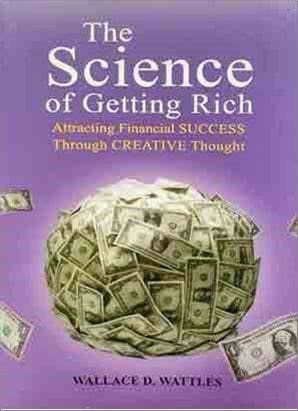
Page Count: 146
First Publication: Elizabeth Towne Company
First Edition: 1910
Summary
The Science of Getting Rich is a self-help book written by New Thought Movement writer Wallace D. Wattles. First published in 1910, the book has remained in print for over a century, going through multiple editions from various publishers.
This book is part of a series by Wattles, including The Science of Being Well (1910), which explores health through the New Thought philosophy, and The Science of Being Great (1911), a guide to personal development. When originally published, all three books had matching covers, reinforcing their connection as a trilogy.
The book is heavily influenced by Hindu philosophies, particularly the concept that "One is All, and All is One." It asserts that thought is the creative force that manifests tangible riches. By shaping ideas in the mind and focusing deeply on them, a person can influence the unseen creative energy of the universe to bring those ideas into reality.
Core Principles of the Book:
(1) The Right to Be Rich: Wealth is a natural right, and seeking riches is a noble pursuit.
(2) Thinking in a Certain Way: Your thoughts shape your reality; think creatively, not competitively.
(3) Gratitude: Cultivate gratitude for what you have and for what is yet to come.
(4) Creative Mindset: Focus on creating value rather than competing for limited resources.
(5) Clear Vision: Define your purpose and visualize your desired outcome.
(6) Efficient Action: Take purposeful, well-planned actions toward your goals.
(7) Faith and Belief: Trust in the process and believe in your ability to achieve wealth.
(8) The Law of Attraction: Like attracts like; align your thoughts and actions with abundance.
(9) Living in the Present: Focus on the present moment while working toward your future.
(10) Giving and Receiving: Contribute value to others, and wealth will flow back to you.
Positive Side of the Book
As stated in the very first line of the preface, this book is practical, not philosophical—a manual, not a theoretical treatise. Wattles is so confident in his teachings that he advises readers not to read other materials that contradict his principles, claiming that this book alone is sufficient to manifest wealth and abundance. Such a strong statement could either come from blind faith or from deep conviction backed by experience.
One of the strengths of the book is its simplicity. Wattles presents wealth-building as a science rather than a mystery, making it accessible to anyone willing to apply his principles. Unlike many modern self-help books that are lengthy and repetitive, The Science of Getting Rich is concise and to the point.
Moreover, the book encourages ethical wealth-building. Wattles emphasizes creating value rather than competing for limited resources, making wealth accumulation a process that benefits both the individual and society. Readers willing to experiment with the action steps outlined in the book may find themselves drawn to a new way of thinking and operating in the world.
Negative Side of the Book
Despite its inspiring message, the book is often criticized for the lack of practical financial advice. The principles it teaches are largely based on the law of attraction and positive thinking rather than concrete wealth-building strategies such as investment, business planning, or money management.
Many critics have labeled the book as pseudoscientific, arguing that it oversimplifies success by suggesting that wealth is purely a matter of mindset. While belief and visualization can be powerful, external factors such as economic conditions, education, and opportunities also play a significant role in financial success.
Another potential downside is that readers may become overly reliant on the concept of thinking in a Certain Way without taking the necessary actions to achieve their goals. Some may fall into the trap of endlessly consuming similar self-help materials without ever applying the principles, leading to little or no real change in their lives.
Conclusion
Like most self-help books, The Science of Getting Rich is a quick read, but the real challenge lies in applying its principles consistently over time. While some may find Wattles’ advice limiting, especially his suggestion to avoid reading conflicting materials, this approach might actually help readers stay focused on implementing the book’s teachings without distraction.
For those who resonate with this book, Think and Grow Rich by Napoleon Hill offers a similar philosophy with additional insights. However, readers seeking practical financial strategies should supplement Wattles’ ideas with modern financial education.
Ultimately, The Science of Getting Rich remains an influential classic, inspiring readers to cultivate a mindset of abundance, take decisive action, and pursue wealth with confidence. Whether one fully agrees with its approach or not, the book offers thought-provoking insights into the power of belief, visualization, and purposeful action in achieving success.

Words from the Book
“There are three motives for which we live; we live for the body, we live for the mind, we live for the soul. No one of these is better or holier than the other; all are alike desirable, and no one of the three—body, mind, or soul—can live fully if either of the others is cut short of full life and expression.”
Rajendra Maharjan
Contact: teacher.rajen@gmail.com
Monday, 10 March 2025
Animal Farm by George Orwell: A Book Review

Page Count: 92
First Publication: Secker & Warburg, UK
Summary
Animal Farm is a political satirical novella brilliantly written by George Orwell (pen name for Eric Arthur Blair). The brilliance in Orwell’s writing is evidenced by the fact that in 2008, The Times named George Orwell the second-greatest British writer since 1945. Animal Farm tells the story of a group of anthropomorphic farm animals who rebel against their human farmer, hoping to build a society based on equality, freedom, and happiness. However, their success is short-lived as they soon find themselves in an even worse situation under an authoritarian ruler who constantly manipulates the very principles they fought for, ensuring he holds absolute power.
The story begins with the “Manor Farm”, owned by a farmer named Jones, who fails to manage the farm properly. The animals rebel against this farmer, take over the farm, and change the name of the farm to “Animal Farm”. The farm is fully operated by the animals for the animals, under the leadership of the pigs named Napoleon and Snowball. Napoleon is portrayed as a corrupted leader and Snowball as a leader who lives for idealistic values and principles that benefit the whole of society. At one point, Napoleon uses the fierce dogs he secretly raised to drive Snowball off the farm. Napoleon seizes absolute control of the farm, and from that moment, the animals’ suffering begins. As time passes, the living conditions of the other animals worsen, while Napoleon and his inner circle indulge in every luxury imaginable. Napoleon implements changes so subtly and persuasively that the animals remain convinced they are better off than under human rule. It is only after a series of grim events that they come to realize the rebellion—founded on the belief that humans are evil and all animals are equal—has ultimately led to their leader forming an alliance with humans, becoming one of them, and enforcing the notion that while all animals are equal, some are more equal than others.
Positive Side of the Book
Although Animal Farm is said to be a political satire against Joseph Stalin’s rule in the Soviet Union after the Russian Revolution of 1917, amazingly, the allegory depicts the situation of many countries even today. It would not be false to state that Animal Farm exactly portrays the Communist movement in Nepal. Having closely observed the Communist movement in Nepal, there is no doubt that the political events here have unfolded almost exactly as depicted in the book.
One of Orwell’s greatest strengths is his ability to craft deeply realistic characters, each embodying different aspects of political ideologies and human nature. There are different characters that we can easily relate to. The idea of the rebellion is initiated by the Old Major, an old pig, who firmly believes in idealistic principles of freedom, equality, justice, etc. After his passing away, another pig named Snowball, a leader, is characterised as a firm follower of the principles introduced by the Old Major. Napoleon, another pig, represents a leader who is a total authoritarian and who is ready to overthrow anyone who does not agree with him and who keeps twisting the principles to stay in power, forming allies even with the enemies. Squealer, a young porker, serves Napoleon in all his deeds. Squealer is so smart that he can convince all the animals that Napoleon is always right. Then there are various other characters, like sheep, who are blind followers of their leader. Then, there is a loyal follower, a horse named Boxer, who works extremely hard with total faith that the authority is creating a better world for all. There is an old donkey named Benjamin, who does not believe there will be change in their lives with the revolution in the political system. He believes life always goes bad, irrespective of any political system. All these and other characters whose opinion regarding the political system differs make this novel so realistic.
The book is so captivating that the readers would not want to put it down for being anxious on how the story will unfold in the following pages.
Negative Side of the Book
This book critiques totalitarianism by illustrating its negative consequences, but it does not explicitly propose solutions. While its message about power and corruption is compelling, some critics argue that Orwell oversimplifies political systems.
Like any political work, the book has faced mixed reactions. Not everyone agrees with its stance against totalitarian rule, and some readers may find its pessimistic tone discouraging.
The book has been banned in Cuba and North Korea due to its satirical critique of totalitarianism and communism. Booksellers in Iran have been warned against selling Orwell’s works, including Animal Farm, for the same reasons. In 1991, Kenya banned a play based on Animal Farm because it was seen as a direct attack on the Kenyan government and could incite rebellion. Animal Farm is still censored in Vietnam.
The United Arab Emirates banned the book in 2002 due to its depiction of talking pigs, which was considered contrary to Islamic values.
Animal Farm has faced bans or restrictions in several countries, primarily due to its political content and, in some cases, religious considerations. These bans highlight the book's ongoing political relevance and the fear it instills in oppressive regimes.
Conclusion
Animal Farm is a must-read for anyone interested in understanding how political structures shape society. It serves as a powerful eye-opener, especially for those who blindly follow political leaders or ideologies. Despite its brevity, the book carries profound depth, offering multiple layers of interpretation that engage thoughtful readers in a long and meaningful reflection.
All readers are equal, but some readers are more equal than others. However, many readers will find Animal Farm to be an unforgettable masterpiece. It is hard to deny the book’s lasting impact and relevance in today’s world.
 Words from the Book
"All animals are equal, but some animals are more equal than others."
"The creatures outside looked from pig to man, and from man to pig, and from pig to man again; but already it was impossible to say which was which."
Rajendra Maharjan
Contact: teacher.rajen@gmail.com
Wednesday, 15 January 2025
The Prophet by Kahlil Gibran: A Book Review
.jpg)
Page Count: 107
Publication: Alfred A. Knopf
Edition: 1923
Summary
The Prophet by Kahlil Gibran is a masterpiece of prose poetry, imbued with mysticism and universal truth. Gibran, a Lebanese-American writer, poet, and artist, was often regarded as a philosopher, though he himself rejected the label. The Prophet is said to have been translated over 100 languages and is one of the best selling books of all time.
The book presents the wisdom of Al Mustafa, the central character, who has lived in the city of Orphalese for 12 years. As he prepares to board a ship which will take him home, the people of the city ask him to share his wisdom on various facets of life, such as love, marriage, children, work, death, and more. Through Al Mustafa, the writer offers profound insights into these topics.
Positive Side
The book is short enough to be read in one sitting, yet its true essence unfolds when savored slowly, allowing time to reflect on its profound messages. A thoughtful reader will naturally pause to ponder the insights woven into its sentences or paragraphs. Deep thinkers will find immense value in its pages. The book does not seem to emerge from mere intellectual reasoning; instead, it feels as though it is drawn from a higher, universal source. To borrow the writer’s style: “The book is not the writer’s creation; it is not his, though it comes through him.” It is a work of genius, an extraordinary blend of literary and spiritual insight.
Negative Side
Readers seeking actionable guidance or practical advice may find this book less satisfying. It does not provide a roadmap or list of tasks to improve one’s life in tangible ways. Instead, the book operates on a deeper, more subtle level, stirring the soul and altering the state of being.
In a world driven by productivity and material goals, this book might seem like a collection of beautiful but impractical words—more a luxury of introspection than a tool for achieving worldly success. For some, this could be seen as a limitation. However, those willing to embrace its mystical and transformative power will find that it changes them in ways that are profound, albeit intangible.
Conclusion
The Prophet is a must-read for anyone drawn to mysticism or seeking a fresh perspective on life’s timeless themes. It is a book that touches the soul, leaving readers feeling changed and enriched. Fans of Paulo Coelho’s works will likely find a place for this book in their hearts.
Highly recommended for deep thinkers, introspective readers, and anyone needing a brief yet meaningful escape from the noise of the world, this book is a treasure to be cherished.

Words from the Book
"Your children are not your children.
They are the sons and daughters of Life’s longing for itself.
They come through you but not from you,
And though they are with you yet they belong not to you."
Rajendra Maharjan
Conact: teacher.rajen@gmail.com
Friday, 20 December 2024
Influence - The Psychology of Persuasion by Robert B. Cialdini, Ph.D. : A Book Review

Book: Influence - The Psychology of Persuasion by Robert B. Cialdini, Ph.D.
Page Count: 568
Publication: HarperCollins Publishers
ISBN: 978-0-06-313880-3 (pb)
Edition: 2021
Summary
As the title suggests Influence: The Psychology of Persuasion by Robert B. Cialdini, Ph.D., explores the psychological principles of persuasion. With over five million copies sold, the book has gained widespread acclaim. The book is divided into seven principles of persuasion. The author supports his principles with numerous studies and experiments on human behaviour, which has been one of the reasons for being the book a bulky one. Cialdini’s principles of persuasion are as follows:
(i) Reciprocation
This principle suggests that giving something before making a request significantly increases the chance of positive response. For example, researchers in the UK found that offering a small packet of sweets to investment bankers doubled their charitable contributions compared to when no gift was given. The lesson: Contribute before asking.
(ii) Commitment and Consistency
This principle suggests that the people feel compelled to stay in consistent with their past commitments and actions. For instance, homeowners who agreed to put a small window sign supporting safe driving were later more willing to place a large billboard in their yard with the same message. The initial small commitment shaped their identity, encouraging consistent behaviour.
(iii) Social Proof
This chapter begins with Eric Hoffer’s quote, “When people are free to do as they please, they usually imitate one another.” An interesting example from the book highlights how a restaurant in China boosted sales by 13 to 20 percent simply by labelling certain menu items as “most popular” instead of “Specialty of the house” or “Our chef’s recommendation for tonight”. Popularity fosters imitation.
(iv) Liking
People tend to say yes to those they like. Building a positive impression is critical in persuasion. The book extensively discusses strategies for becoming more likeable, emphasizing their importance in effectively influencing others.
(v) Authority
People are inclined to trust authority figures. For instance, medical advice is often taken more seriously when given by doctors. Similarly, a Ph.D. in Economics lends credibility to an economic analysis, even if the expert’s conclusions might be erroneous. Establishing authority is key to persuasion in both personal and professional life.
(vi) Scarcity
The perception of scarcity intensifies desire. A prospective buyer, for example, may feel compelled to purchase a plot of land after being told it is the last one available in the area. This fear of missing out on an opportunity often triggers action.
(vii) Unity (the newest principle for this edition)
Shared identity strengthens persuasion. People are more easily convinced by those with whom they share common ground – whether it’s the same city, religion, club, school, or even bloodline. Unity fosters trust and acceptance.
Positive Side of the Book
After reading How to Win Friends and Influence People by Dale Carnegie, I believed that everything about dealing with people had already been covered. But decades after publishing the first edition of the Carnegie’s book, there comes this book, Influence: The Psychology of Persuasion and to my amazement, despite covering similar themes, the two books are distinct and equally insightful. Influence has a fresh taste with modern and research-driven outlook. The book’s strength lies in its extensive studies and experiments to substantiate the principles explained therein. Additionally, the book cautions that these principles can be applied both ethically and unethically.
Negative Side of the Book
The author’s frequent repetition of certain words (like “compliance professionals” and “click, run”) while aiming for originality, may feel redundant to some readers. The author could have written using more varied expressions. The book is a long read making it more suited to serious readers with deep interest in the subject.
Conclusion
The book is an excellent read for anyone interested in influencing people through a deeper understanding of human psychology. It is highly recommended to the professionals whose work revolves around engaging with people. Fans of Dale Carnegie’s classic, How to Win Friends and Influence People will find this book a deeper, research-backed exploration of the art of persuasion. The book is highly recommended to those who are passionate about the subject.
Wednesday, 1 November 2023
8 Golden Lessons from the Book "Direct from Dell"

“Direct from Dell” is an autobiographical book written by Michael Dell sharing his story of starting the business from scratch to building the business empire. Along with the eye-opening lessons scattered throughout the pages, one of the beauties that can be noticed is that the writer uses both "he" and "she" pronouns to refer to customers or team members showing respect for both genders. This book is highly recommended to people who are or aspire to become successful entrepreneurs. This article explores the eight valuable lessons from the book that can guide entrepreneurs and business enthusiasts towards success.
Lesson 1: Execution Over Perfection
In the business world, prioritizing execution over perfection is crucial. Many people wait for the perfect time to start their project. Not only business projects but also personal pursuits like beginning an exercise routine, embarking on a reading journey, or venturing into book writing do not require any perfect time to start. What truly matters is commencing the journey rather than fixating on perfect timing. Perfect starting is not the point, but the important thing is to start and evolve along the journey. A little late might be too late in business.
Quote from the Book
“The pace of business moves too quickly these days to waste time noodling over a decision. And while we strive to always make the right choice, I believe it’s better to be first at the risk of being wrong than it is to be 100 per cent perfect two years too late.”
Lesson 2: Perfection is a Myth
There is no such thing as perfect, especially in a business organization. Business organization, no matter how professionally managed or whatever it has achieved, cannot be perfect. Because perfect means the state where no change is required and in business, the way business is managed requires continuous changes as per the change in the market. There is always room for progress, always something more to be done and achieved. Improvements can always be made, and businesses should be open to change. Perfection is a myth.
Quote from the Book
““There’s a saying in the technology field that what can be done, will be done. If something can be improved, someone will figure out a way to do it. No matter what your business, that someone had better be you.”
Lesson 3: Respect Customers
Quote from the Book
“If you’re trying to solve a customer’s problem, go and ask him how he’d like to see it solved. This kind of problem-solving “empathy” leads to innovative thinking.”
“In the market, the customer is indeed the king. Due respect should be given to the king. The first thing that shows respect to the customer is producing not what the business wants to produce but what the customers want to buy. There is no point in producing anything that customers do not buy. Once goods or services are sold, continuous customer service is equally important to show respect to the customers. Customer loyalty and the strength of a long-lasting brand depend on customer service. The goods and services should be modified as per the requirements of the customers. For that, continuous feedback from the customers should be collected and that feedback must be taken seriously. Respecting customers is paramount..”
Quote from the Book
“Jack Welch of General Electric (a Dell customer, we’re happy to say) has been quoted as saying, “Everything we do is aimed at either getting a customer or keeping a customer.” That’s a belief that’s always guided Dell, too. I spend about 40 percent of my time with customers. When people hear that, they often say, “Wow—that’s a lot of time to spend with customers.””
Lesson 4: Direct Sell Approach
The massive success of Dell is significantly attributed to the least taken route by the other businesses, which is the “Direct Sell" approach of the company. Dell is guided by the principle of selling the computers directly to the end consumers, breaking the barriers between distributors and retailers. As mentioned above, Dell is strongly convinced that the product must be as per the needs of the customers. To understand the needs of the customers, the company must collect feedback from the customers. Feedback is essential for the survival and growth of any business. If the company is in direct contact with the end users of the product, feedback can be collected easily. A large part of the genuine feedback is lost along the way if it is collected through distributors and retailers. When the company which manufactures the product is in direct contact with the customers, their comments and suggestions can be directly messaged to the engineering department to modify the product swiftly. The title of the book, "Direct from Dell", shows how Dell values the direct sell approach.
Lesson 5: Use of E-commerce in the Business
Dell was an early adopter of e-commerce, using its website for custom configurations and pricing. The book describes how sales were boosted using the site: www.dell.com. The author describes that using this innovative approach saved the cost of human resources for the company and saved time of visiting the store for the consumers, highlighting the importance of embracing e-commerce. Dell started selling computers online when no one believed it was possible. The belief was that customers would not buy computers from those who do not have physical stores. But Dell was among the first companies to make online sales and it paid off well. The use of e-commerce for business has become inevitable for all businesses.
Lesson 6: Delegation
The decision of delegation is crucial in any business. While manufacturing the computers, Dell repeatedly had to face the problem of deciding whether to manufacture the parts by Dell itself or buy from other vendors. Many times, it was more beneficial for the company to buy the parts from other vendors so that the company could focus on the product itself. Dell's approach of focusing on core competencies is a valuable lesson in delegation.
Quote from the Book
“…someone at Boeing once said, “We want to be experts at airplanes, not computers.”
Lesson 7: The Goal-oriented Team
Ensuring that the entire team understands how their work impacts the overall business is essential. The book describes that at Dell, even the non-finance employees such as engineers were provided with Profit and Loss Statements and Balance Sheets. They were provided with insights into how their work affects the sales, profit, cash flow etc.
Lesson 8: Liquidity, Profitability and Growth
In 1993 when Dell faced a serious downturn in the business, Dell prioritized the company's liquidity, profitability, and growth, in that order. This is such an eye-opening strategy. If a business focuses on profitability or growth before liquidity, the business will face a financial crisis. Liquidity is the first factor to be considered by the business. But liquidity is not the final goal. After the business is in a comfortable liquidity position, its target should be profitability. A business cannot survive long without adequate profit. However, rapid growth in profitability for a certain time does not guarantee the long-term sustainability of the business. The long-term sustainability of the business depends on the growth of the business. The end goal of the business should be growth, but it must be preceded by a series of other factors.
Conclusion
"Direct from Dell" provides a wealth of lessons for entrepreneurs and business leaders. Michael Dell's journey serves as a testament to the significance of adaptability, innovation, and customer-centric approaches in attaining success.
Monday, 30 October 2023
How I Raised Myself from Failure to Success in Selling by Frank Bettger: A Book Review
 How I Raised Myself from Failure to Success in Selling by Frank Bettger
My rating: 4 of 5 stars
"How I Raised Myself From Failure to Success in Selling" by Frank Bettger is a book dealing with the sales techniques. Despite being first published in 1947, the techniques outlined in the book continue to hold their relevance in this ever-evolving world of sales. As an accomplished insurance salesman himself, the author shares the insights he gained from his own first-hand experience in this book. The instructions given in this book are not merely the ideas and opinions popped up in the mind of the author while sitting and thinking inside a room, but they are the "tested" ideas in the practical world.
Much of the tips and the content of the book share the same ideas presented in the works of Dale Carnegie. Since they were good friends, brought up in the same era and came from the same school of thought, it is quite understandable that they share a similar opinion regarding the techniques in influencing people. However, there is one contradictory view between Bettger and Carnegie. Carnegie is in the opinion that the "people skill" is more important than the technical knowledge in order to succeed. But Bettger, in one of the chapters in this book, states that we are in the age of specialization. And he suggests that one should always thrive towards specialization because the specialized one will ultimately win in the sales business. While both perspectives have merit, it is safe to say that the blend of "people skill" and specialized knowledge is the recipe for the success in modern sales.
The book is full of eye-opening, real-life stories placed relevantly in the chapters. It contains undeniable tips and techniques to boost sales. Most of the self-help books contain tons of information and after finishing the book, the readers find it confused as to what to make out of all those enlightening information. The best part of this book is that this book, not only contains important information but also shows the readers how to use the information contained in the book. It is a must-read book for the people in the sales business; especially the ones engaged in the insurance sales business will find it one of the most important sources of knowledge for their professional advancement.
View all my reviews
Wednesday, 20 September 2023
The Art of Public Speaking by Dale Carnegie: A Book Review

Having previously enjoyed Carnegie's notable works such as 'How to Win Friends and Influence People' and 'How to Stop Worrying and Start Living,' my expectations were set exceptionally high. Perhaps due to this, 'The Art of Public Speaking' fell slightly short of delivering the same level of satisfaction. There's no doubt that Carnegie is a credible authority to tackle such a subject, given that even Warren Buffett is said to have taken his public speaking course.
Personal reading experiences may vary, but for me, completing this book felt like a bit of a drag. Nevertheless, it's remarkable that many of the book's principles remain relevant in today's world, even though it was originally published in 1915.
Monday, 29 May 2023
The Go-Giver: A Little Story About a Powerful Business Idea

The narrative follows the character of Joe, a young and ambitious professional striving to excel in the competitive world of sales. Frustrated by his lack of progress, Joe seeks guidance from a legendary mentor named Pindar. What follows is a series of encounters with influential individuals who impart five fundamental principles that redefine Joe's understanding of success. The five laws, also referred to as the Five Laws of Stratospheric Success mentioned in the book are:
1. The Law of Value:
Your true worth is determined by how much more you give in value than you take in payment. This law emphasizes the importance of providing exceptional value to others and focusing on their needs and desires.
2. The Law of Compensation:
Your income is determined by how many people you serve and how well you serve them. By serving a greater number of people and meeting their needs effectively, you create opportunities for greater compensation and success.
3. The Law of Influence:
Your influence is determined by how abundantly you place other people's interests first. Building genuine relationships based on trust, goodwill, and a focus on others' well-being allows you to have a positive influence and create a strong network of support.
4. The Law of Authenticity:
The most valuable gift you have to offer is yourself. Being authentic and true to yourself allows you to bring your unique strengths and qualities to the table, attracting the right opportunities and connections.
5. The Law of Receptivity:
The key to effective giving is to stay open to receiving. By being receptive to help, insights, and opportunities from others, you create a reciprocal flow of abundance and allow for continued growth and success..
In conclusion, The Go-Giver is an insightful short read emphasizing the importance of giving value to the customers in order to generate abundance of income. The writing style of the book can be compared with "5 AM Club" by Robin Sharma. The similarity of the two books is limited only to the writing style. Unlike 5 AM Club, The Go-Giver's concise narrative successfully conveys its message without leaving readers feeling bored, thanks to its brevity. Readers who find enjoyment in "The Go-Giver" are likely to appreciate "Who Moved My Cheese" by Spencer Johnson as well.
=====================================================================================================================
A few words extracted from this amazing book:
"All things being equal, people will do business with and refer business to those people they know, like and trust."
=====================================================================================================================
"Your true worth is determined by how much more you give in value than you take in payment"
=====================================================================================================================
"Your income is determined by how many people you serve and how well you serve them."
=====================================================================================================================
"What you focus is what you get."
=====================================================================================================================
"Your influence is determined by how abundantly you place other people's interest first."
=====================================================================================================================
Saturday, 3 September 2022
Book Review: Long Walk To Freedom

=======================================================================================
.....my commitment to my people, to the millions of South Africans I would never know or meet, was at the expense of the people I knew best and loved most. It was as simple and yet as incomprehensible as the moment a small child asks her father, “Why can you not be with us?” And the father must utter the terrible words: “There are other children like you, a great many of them . . .” and then one’s voice trails off.
=======================================================================================
"Long Walk to Freedom" is an autobiography of the South African leader, Nelson Mandela. Six hundred plus pages of this book requires patience or at least a certain degree of interest to peek into the life of a leader who sacrificed his life for his belief. The book takes us into the journey from the young boyhood of Nelson Mandela growing into adulthood enrolling in the college and gaining acquaintance with the oppression by the white people to the black people. The journey then takes us into the rise in political awareness in the mind of young Nelson Mandela. He becomes member of the organization called African National Congress (ANC). The book also describes his experience to work in a law firm and then starting his own law firm with his partner. In Africa, the black people were badly discriminated and they were avoided from man of their basic rights. Nelson Mandela raised his voice and led the people against the apartheid. For taking part in the struggle against the injustice to the black people, he went through lot of hardship. He was imprisoned for about 27 years. All the events which happened during his stay in the prison is so beautifully described, his experience was mostly painful though. He along with his wife and his children suffered equally for his fight against the apartheid. The book is beautifully written and all the pages gripped me to the end.
Although I am not particularly interested in politics, this book kept me spellbound for many reasons. The book gave me a closer view of the South African tribal lives and their customs. There was nasty segregation of the black people. What really interested me was the similarity between the political development in South Africa and in Nepal. After so many times trying to negotiate in peaceful manner and failing, Nelson had to start armed struggle against the government. Many people died in the armed struggle in South Africa. Same thing happened in Nepal during the armed struggle in the name of Maoist movement. After the government and the armed struggle force came into peaceful talks, there was election of constituent assembly in South Africa. Same thing happened in Nepal. Mandela and Frederik Willem de Klerk got Nobel peace prize. No wonder Babu Ram Bhattarai, Prachanda and Girija Prasad Koirala were expecting Nobel prize for peace. So many similarities between the political development between the two countries except for the fact that no high level leader in Nepal who were on the side of the armed struggle got imprisoned and non of them had the honesty and integrity as Nelson Mandela.
Although the book is pretty long and detailed I still find some details missing. It is a curiosity in my mind which has not been fully addressed by the book. I wished that Mandela had disclosed minutely about the source of fund for mobilizing armed struggle and how finance was managed. After coming out of the prison, I wonder how he was able to build his house and how his personal finance was managed. It would have been really nice to look into how money is managed under such abnormal circumstances.
Overall, the book is captivating. I really enjoyed every page of it. It is not a long-boring political book. Rather it is a book which takes us into the pain, struggle and sacrifice of the leader for the betterment of the society at large. I would recommend this book to anyone who would like to meet a strong and determined person. If you like this book, you will also love "My Experiments with Truth", an autobiography of Mahatma Gandhi. I would rate this book 4 out of 5 stars.
=====================================================================================================================
A few words extracted from this amazing book:
"I had been taught that to have a B.A. meant to be a leader, and to be a leader one needed a B.A. But in Johannesburg I found that many of the most outstanding leaders had never been to university at all. Even though I had done all the courses in English that were required for a B.A., my English was neither as fluent nor as eloquent as many of the men I met in Johannesburg who had not even received a school degree."
=====================================================================================================================
"I have always believed that exercise is not only a key to physical health but to peace of mind."
=====================================================================================================================
"I had concluded that the time had come when the struggle could best be pushed forward through negotiations. If we did not start a dialogue soon, both sides would be plunged into a dark night of oppression, violence, and war. My solitude would give me an opportunity to take the first steps in that direction, without the kind of scrutiny that might destroy such efforts. We had been fighting against white minority rule for three-quarters of a century. We had been engaged in the armed struggle for more than two decades. Many people on both sides had already died. The enemy was strong and resolute. Yet even with all their bombers and tanks, they must have sensed they were on the wrong side of history. We had right on our side, but not yet might. It was clear to me that a military victory was a distant if not impossible dream. It simply did not make sense for both sides to lose thousands if not millions of lives in a conflict..."
=====================================================================================================================
"Walter considered what I told him. I could see he was uncomfortable, and at best, lukewarm. “In principle,” he said, “I am not against negotiations. But I would have wished that the government initiated talks with us rather than us initiating talks with them.” I replied that if he was not against negotiations in principle, what did it matter who initiated them? What mattered was what they achieved, not how they started. I told Walter that I thought we should move forward with negotiations and not worry about who knocked on the door first."
=====================================================================================================================
"A mother’s death causes a man to look back on and evaluate his own life. Her difficulties, her poverty, made me question once again whether I had taken the right path. That was always the conundrum: Had I made the right choice in putting the people’s welfare even before that of my own?"
=====================================================================================================================
“We watched our children growing without our guidance,” I said at the wedding, “and when we did come out [of prison], my children said, ‘We thought we had a father and one day he’d come back. But to our dismay, our father came back and he left us alone because he has now become the father of the nation.’ ” To be the father of a nation is a great honor, but to be the father of a family is a greater joy. But it was a joy I had far too little of.
=====================================================================================================================
Friday, 15 April 2022
True Follower

"But", he was asked,"Would not even the change in the Teacher cause you sorrow, despair or grief?"
"Not even the change in the Teacher would do that", the Venerable Sariputra replied. "I wish that the Teacher would remain with us for the benefit of the many, for the welfare of the many, out of compassion for the world. But his passing would not cause me sorrow or despair." And the Buddha approved of his answer.
Conclusion: Many of the conflicts have been raised among the disciples due to the attachment towards the teachers. Liberation, not the attachment to the teachers, should be the goal of the followers.
Thursday, 14 April 2022
Devotion to the Buddha

The Buddha called Vakkali amidst the assembly and said,"Why do you constantly gaze at my body, which is transitory, subject to suffering and without essence? Why do your eyes constantly dwell on this corporeal form, which is nothing but a sack of impurities? It would be better for you to seek out a forest retreat and there strive earnestly to gain that liberation which brings all formations to an end."
Giving him the subject of meditation, he dismissed the monk. The Bhikkhu thereupon retired to the forest, strove earnestly for insight, and after some time duly attained Arahantship.
Moral: Attachment to the Guru can also be hindrance for liberation.
Thursday, 20 January 2022
Discrimination

Saturday, 20 November 2021
अब सौंप दिया इस जीवन का, सब भार तुम्हारे हाथों में

है जीत तुम्हारे हाथों में, और हार तुम्हारे हाथों में, और हार तुम्हारे हाथों में॥
मेरा निश्चय बस एक यही, एक बार तुम्हे पा जाऊं मैं, एक बार तुम्हे पा जाऊं मैं।
अर्पण करदूँ दुनिया भर का सब प्यार तुम्हारे हाथों में, सब प्यार तुम्हारे हाथों में॥
जो जग में रहूँ तो ऐसे रहूँ, ज्यों जल में कमल का फूल रहे, ज्यों जल में कमल का फूल रहे।
मेरे सब गुण दोष समर्पित हों, भगवान तुम्हारे हाथों में, भगवान तुम्हारे हाथों में॥
यदि मानव का मुझे जनम मिले, तो तव चरणों का पुजारी बनूँ, तो तव चरणों का पुजारी बनूँ।
इस पूजक की एक एक रग का हो तार तुम्हारे हाथों में, हो तार तुम्हारे हाथों में॥
जप जब संसार का कैदी बनू, निष्काम भाव से करम करूँ, निष्काम भाव से करम करूँ।
फिर अंत समय में प्राण तजूं, निरंकार तुम्हारे हाथों में, निरंकार तुम्हारे हाथों में॥
मुझ में तुझ में बस भेद यही, मैं नर हूँ तुम नारायण हो, मैं नर हूँ तुम नारायण हो।
मैं हूँ संसार के हाथों में, संसार तुम्हारे हाथों में, संसार तुम्हारे हाथों में॥
अब सौंप दिया इस जीवन का, सब भार तुम्हारे हाथों में, सब भार तुम्हारे हाथों में ।
है जीत तुम्हारे हाथों में, और हार तुम्हारे हाथों में, और हार तुम्हारे हाथों में॥
Monday, 15 November 2021
The Power of Full Engagement: Managing Energy, Not Time, Is the Key to High Performance and Personal Renewal by Jim Loehr and Tony Shwartz

Tuesday, 12 October 2021
पुस्तक समीक्षा - समर लभ

धेरै बर्षअघि, सायद सन् २००८ मा, म युके को एकजना साथीसंग म्यासेन्जरमा च्याट गर्दै थिएँ. बिबाह त भएको थिएन तर उनि आफ्नो प्रेमीसंगै बस्दै आएकी थिईन्, जसलाई त्यहाँको समाजले सहज रुपमा लिने गर्दछ, जुन कुरा हाम्रो नेपाली समाजमा अहिले पनि अपाच्य नै छ. यसै प्रसंगमा कुराकानी हुदै जाँदा बिबाह अघिको शाररिक सम्बन्ध (premarital sex) का बिषयमा प्रवेश भयो. उनि भन्दैथिईन्, "तिम्रो समाजले बिबाह अघिको शाररिक सम्बन्धलाई स्वीकार्दैन किनभने सेक्सलाई पबित्रतासंग गाँसेर हेर्छ. मेरो बिचारमा सेक्स न त पबित्र क्रिया हो न अपवित्र."
हिजो मात्र मैले सुबिन भट्टराई द्वारा लिखित नेपाली उपन्यास "समर लभ" पढेर सिध्याएँ. यस उपन्यासको उत्तरार्धतिर दुई पात्रहरु बीच शाररिक सम्बन्धको प्रसंग छ, जसका बिषयमा ती पात्रहरुको धारणा माथि उल्लेखित मेरो साथीको विचारसंग मिल्दो-जुल्दो थियो. उनीहरुले शाररिक सम्बन्धलाई पबित्र वा अपवित्र, पाप वा धर्म, सुकर्म वा कुकर्म, प्रेम वा बास्ना जस्ता व्याख्याभन्दा अलग्गै अस्तित्वको क्रियाका रुपमा सहजताकासाथ स्वीकार गरेको देखिन्छ. उपन्यासको यौनप्रतिको यो उदारताका कारण पनि भर्खरै खुल्दै आएको नेपाली समाजका युवा बर्गले यस उपन्यासलाई अत्याधिक रुचाएको हुनुपर्छ भन्ने मेरो अनुमान छ. कथामा नयाँ नौलो बिषय केहि नभए पनि, प्रेम प्रसंगको वरिपरी घुमेको यस उपन्यासले समसामयिक सोच र जीवन शैलीलाई चित्रण गर्न सफल भएको छ. कलेज जीवन र कलेजमा हुने प्रेम प्रसंगलाई समसामयिक रुपमा प्रस्तुत गरिएकोछ. उपन्यासको अन्तिमतिर, प्रेम वियोगबाट मूल पात्रको मानस पतलमा उत्पन्न भएका सम्बादहरुमा लेखकले आवस्यक भन्दा बढी शब्दहरु र पृष्ठहरु खर्चेको भान भयो.
अत्याधिक पाठकहरुले उपन्यासको अन्त्य खल्लो भएको प्रतिक्रिया जनाइरहंदा मलाई चाहि उपन्यासको पुरै कथा एकजना पात्रको कोणबाट बताइएको र अर्को पात्रको कोणलाई अधुरो नै छोडी अर्को sequel book का लागि थाँती राखी suspense मा कथा अन्त्य गरेको साह्रै मनपर्यो.
व्यक्तिगत रुपमा मलाई यो विधा (genre) का पुस्तकहरुमा खासै रुची लाग्दैन. तर पनि सर्वाधिक रुचाइएको उपन्यास भएका कारणले मैले यो उपन्यास पढेको हुँ . उपन्यास सारै सरल र समसामयिक भाषामा लेखिएको छ. हलुका साहित्यमा रुची हुने बिशेषत: भर्खरका युवाहरुलाई यो उपन्यास राम्रो लाग्न सक्दछ. साहित्यको गहिराइमा डुब्न चाहने वजनदार साहित्यमा रुची हुने पाठकहरुलाई भने यो उपन्यास फिक्का लाग्न सक्छ. संसारमा सबै कुरा सबैलाई कहाँ मनपर्छ र ? जे होश यो उपन्यास रुचाउने पाठकहरुले यसको sequel उपन्यास "साया" अवश्य पढ्नेछन् .
अन्तमा, यस उपन्यासको नाम "समर लभ" चाहि किन रह्यो भन्ने मैले बुझ्न सकिन .
Friday, 1 October 2021
The Ocean

"My God, this is terrible," the wave said. "Look what's going to happen to me?"
Then came along another wave. It saw the first wave, looking grim, it asked, "Why do you look so sad?"
The first wave replied, "We're all going to crash! All of us waves are going to be nothing. Isn't it terrible?"
The second wave said, "No, you don't understand. Actually, you're not a wave, you're a part of the ocean. You are the ocean."
Subscribe to:
Posts (Atom)