
Tuesday, 3 February 2026
Monday, 22 December 2025
The Subtle Art of Not Giving a Fuck by Mark Manson: A Book Review

Page Count: 212
Publisher: HarperCollins Publishers
First Published Year: 2016
The Subtle Art of Not Giving a Fuck is written by Mark Manson, a superstar blogger known for his bold opinions and unconventional style. Unlike traditional motivational books that promote constant positivity, this book takes a more honest and realistic approach to life.
One of the most striking features of the book is its use of profane, unfiltered language mixed with humour. Mark Manson deliberately avoids polished or sugar-coated words. Instead, he uses raw language to connect with readers and to challenge commonly accepted ideas about happiness, success, and self-improvement.
Despite its shocking title, the book does not encourage people to be careless or irresponsible. Rather, it teaches readers to be selective about what they care about. According to Manson, we all have a limited amount of time, energy, and emotional capacity. Therefore, instead of trying to care about everything, we should “narrow down the things on which to give a fuck” and focus only on what truly matters in our lives.
The book also highlights how most people today live in constant “highs.” These highs may come in harmless-looking forms such as scrolling through mobile phones, reading, chatting online, or seeking constant entertainment. While these activities provide temporary pleasure, Manson argues that giving too many fucks to such distractions pulls us away from meaningful goals and values. He suggests that we should stop chasing every high and instead invest our attention in things that genuinely add value to our lives.
Overall, The Subtle Art of Not Giving a Fuck is a thought-provoking book that encourages readers to rethink their priorities. It teaches that a meaningful life is not about avoiding problems, but about choosing the right problems to care about.
Tuesday, 20 May 2025
The 50-Buck Illusion: Our Choice of Appearance Over Reality

A photographer once hung a clever sign outside his studio:
- For 20 bucks: A photo of you as you truly are.
- For 30 bucks: A photo of you as you think you are
- For 50 bucks: A photo of you as you want others to see you.
Years later, in his memoir, he reflected: "In all my decades of work, not a single person ever asked for the 20-buck photo. Everyone wanted the 50-buck one."
That simple observation says a lot about us. Most of us don't want to see ourselves plainly; we want to be seen as society wants us to be seen. We crave admiration, not honesty. Ultimately, much of life is shaped by appearances: How we want to be seen, not necessarily who we are. It might cost us inconvenience or mental peace. If we accept ourselves honestly, as we are, we would be much lighter and happier.
Rajendra Maharjan
Email: teacher.rajen@gmail.com
Tuesday, 1 April 2025
Fool's Gold

Watch him as he tries to play;
No, he does n't know the way.
He began to learn too late.
She's a grim old hag, is Fate,
For she let him have his pile,
Smiling to herself the while,
Knowing what the cost would be,
When he'd found the Golden Key.
Had the money hunger bad,
Mad for money, piggish mad.
Did n't let a joy divert him,
Did n't let a sorrow hurt him,
Let his friends and kin desert him,
While he planned and plugged and worried.
Nothing stopped him as he scurried,
On his quest for gold and power.
Every single wakeful hour,
With a money thought he'd dower.
All the while as he grew older,
And grew bolder, he grew colder.
And he thought that some day
He would take time to play,
But say—
He was wrong.
Life's a song.
In the spring
Youth can sing and can fling,
But joys wing,
When we're older,
Like birds when it's colder.
The roses were red as he went rushing by,
And cloud-woven tapestries hung in the sky,
And the clover was waving
'Neath honey bees slaving.
A bird over there
Rondelayed a soft air.
But the man could n't spare
Time for gathering flowers,
Or resting in bowers,
Or gazing at skies
That gladdened the eyes.
So he kept on and swept on
Through mean, sordid years.
Now he's up to his ears
In the choicest of stocks.
He owns endless blocks
Of houses and shops,
And the stream never stops
Pouring into his banks.
I suppose that he ranks
Pretty near to the top;
What I have won't sop
His ambition one tittle,
And yet with my little
I'm sure I'd not trade
With the bargain he made.
Just watch him to-day,
See him trying to play.
He's come back for spring skies,
But they're in a new guise.
Winter's here, all is gray.
The birds are away,
The meadows are brown,
The leaves lie aground,
And the gay brook that wound
With a swirling and whirling
Of waters is furling
Its bosom in ice.
And he has n't the price,
With all of his gold,
To buy what he sold;
He knows now the cost
Of the Springtime he lost,
Of the flowers he tossed
From his way,
And say
He'd pay
Any price if the day
Could be made not so gray—
He can't play.
By Herbert Kaufman
Monday, 31 March 2025
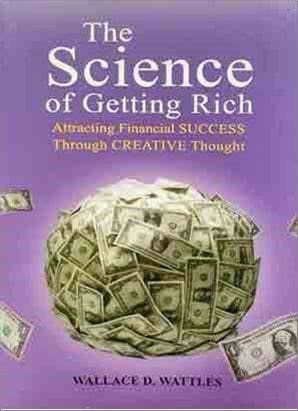
The Science of Getting Rich by Wallace D. Wattles: A Book Review
Page Count: 146
First Publication: Elizabeth Towne Company
First Edition: 1910
Summary
The Science of Getting Rich is a self-help book written by New Thought Movement writer Wallace D. Wattles. First published in 1910, the book has remained in print for over a century, going through multiple editions from various publishers.
This book is part of a series by Wattles, including The Science of Being Well (1910), which explores health through the New Thought philosophy, and The Science of Being Great (1911), a guide to personal development. When originally published, all three books had matching covers, reinforcing their connection as a trilogy.
The book is heavily influenced by Hindu philosophies, particularly the concept that "One is All, and All is One." It asserts that thought is the creative force that manifests tangible riches. By shaping ideas in the mind and focusing deeply on them, a person can influence the unseen creative energy of the universe to bring those ideas into reality.
Core Principles of the Book:
(1) The Right to Be Rich: Wealth is a natural right, and seeking riches is a noble pursuit.
(2) Thinking in a Certain Way: Your thoughts shape your reality; think creatively, not competitively.
(3) Gratitude: Cultivate gratitude for what you have and for what is yet to come.
(4) Creative Mindset: Focus on creating value rather than competing for limited resources.
(5) Clear Vision: Define your purpose and visualize your desired outcome.
(6) Efficient Action: Take purposeful, well-planned actions toward your goals.
(7) Faith and Belief: Trust in the process and believe in your ability to achieve wealth.
(8) The Law of Attraction: Like attracts like; align your thoughts and actions with abundance.
(9) Living in the Present: Focus on the present moment while working toward your future.
(10) Giving and Receiving: Contribute value to others, and wealth will flow back to you.
Positive Side of the Book
As stated in the very first line of the preface, this book is practical, not philosophical—a manual, not a theoretical treatise. Wattles is so confident in his teachings that he advises readers not to read other materials that contradict his principles, claiming that this book alone is sufficient to manifest wealth and abundance. Such a strong statement could either come from blind faith or from deep conviction backed by experience.
One of the strengths of the book is its simplicity. Wattles presents wealth-building as a science rather than a mystery, making it accessible to anyone willing to apply his principles. Unlike many modern self-help books that are lengthy and repetitive, The Science of Getting Rich is concise and to the point.
Moreover, the book encourages ethical wealth-building. Wattles emphasizes creating value rather than competing for limited resources, making wealth accumulation a process that benefits both the individual and society. Readers willing to experiment with the action steps outlined in the book may find themselves drawn to a new way of thinking and operating in the world.
Negative Side of the Book
Despite its inspiring message, the book is often criticized for the lack of practical financial advice. The principles it teaches are largely based on the law of attraction and positive thinking rather than concrete wealth-building strategies such as investment, business planning, or money management.
Many critics have labeled the book as pseudoscientific, arguing that it oversimplifies success by suggesting that wealth is purely a matter of mindset. While belief and visualization can be powerful, external factors such as economic conditions, education, and opportunities also play a significant role in financial success.
Another potential downside is that readers may become overly reliant on the concept of thinking in a Certain Way without taking the necessary actions to achieve their goals. Some may fall into the trap of endlessly consuming similar self-help materials without ever applying the principles, leading to little or no real change in their lives.
Conclusion
Like most self-help books, The Science of Getting Rich is a quick read, but the real challenge lies in applying its principles consistently over time. While some may find Wattles’ advice limiting, especially his suggestion to avoid reading conflicting materials, this approach might actually help readers stay focused on implementing the book’s teachings without distraction.
For those who resonate with this book, Think and Grow Rich by Napoleon Hill offers a similar philosophy with additional insights. However, readers seeking practical financial strategies should supplement Wattles’ ideas with modern financial education.
Ultimately, The Science of Getting Rich remains an influential classic, inspiring readers to cultivate a mindset of abundance, take decisive action, and pursue wealth with confidence. Whether one fully agrees with its approach or not, the book offers thought-provoking insights into the power of belief, visualization, and purposeful action in achieving success.

Words from the Book
“There are three motives for which we live; we live for the body, we live for the mind, we live for the soul. No one of these is better or holier than the other; all are alike desirable, and no one of the three—body, mind, or soul—can live fully if either of the others is cut short of full life and expression.”
Rajendra Maharjan
Contact: teacher.rajen@gmail.com
Subscribe to:
Posts (Atom)